Project Description
The GroundedExtremes Project – Understanding and governing groundwater to reduce risk of hydrological extremes
Hydrological extremes are expected to occur more frequently and become more severe, making drought and flood risk management essential for adaptation. The GroundedExtremes project (“Understanding and governing groundwater to reduce risk of hydrological extremes”) aims to investigate groundwater and hydrological extremes, and design improved groundwater management as a powerful adaptation strategy to both droughts and floods, avoiding long-term unintended consequences and unwanted trade-offs. The GroundedExtremes project is built around knowledge exchange and transferability concepts and is organised along two axes: 1) three work packages (WPs) and 2) four case studies. WP1 analyses physical groundwater drought processes
(i.e., development, duration, and recovery) and drivers such as climate, land use, groundwater abstractions, and subsurface characteristics. It also explores potential futures through stress tests. WP2 investigates drought management and groundwater governance and maps the involved actors to assess the arrangements that contribute to dealing with extremes. WP3 studies adaptation measures using a socio-hydrological model that integrates the drought drivers and physical processes from WP1 and the actor mapping and policy analysis of WP2 (Figure 1) to model how combinations of drought adaptation measures can result in different future groundwater conditions using storylines (Figure 2). Solutions are assessed with a view to potential trade-offs and consequences on flood risk.
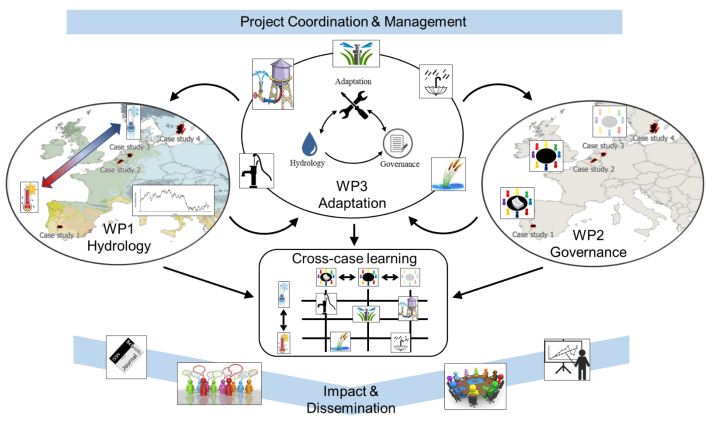
Figure 1. Overview of the Grounded Extremes work packages and project management.
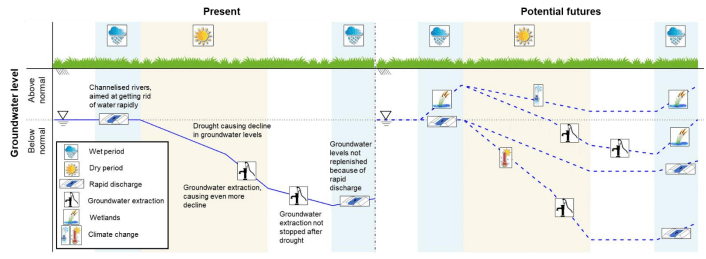
Figure 2. Example narratives of groundwater development during situations of dry and wet hydrological extremes. On the left, a hypothetical case in the present. The right side shows possible variations of this narrative in the future with better management of the system, but also taking into account climate change.
Groundwater hydrological behaviour and adaptation strategies are explored in four regions in Europe with different physical, societal and water governance contexts. An approach of cross-case study collaboration and learning is applied by focusing on differences and similarities, thus enabling general recommendations to be given from local adaptations.
Key to the project is the involvement of local stakeholders, which guide the modelling and ground the adaptation measures investigated and the proposed storylines in reality. GroundedExtremes is a 3-year project (April 2024 – March 2027) funded by the Water4All partnership, NWO (Netherlands), FORMAS (Sweden), FWO (Belgium), AEI (Spain), and RCN (Norway)

Coordination
Department of Water and Climate Risk,
Institute for Environmental Studies (IVM),
Vrije Universiteit Amsterdam,
The Netherlands
 GroundedExtremes