The first workshop of the GroundedExtremes project was organised in collaboration with RESHAPE, RESTART’in, and WaterScape, and focused on identifying solutions to strengthen the resilience of the North Brabant Province to climate extremes and especially drought. The workshop brought together a broad range of stakeholders, including representatives from the province, water boards, municipalities, the drinking water company, farmer organisations, and academia.
To structure the discussions, participants worked in small groups and explored three future horizons. Horizon 1 represented a business-as-usual trajectory, in which current practices and policies continue essentially unchanged. Horizon 3 described an ideal future in which landscapes are well adapted to climate extremes. Among these, Horizon 2 focused on disruptive innovations and the transitional pathways needed to move from the present toward that ideal future. This framing encouraged participants to think beyond incremental improvements and consider more fundamental changes.
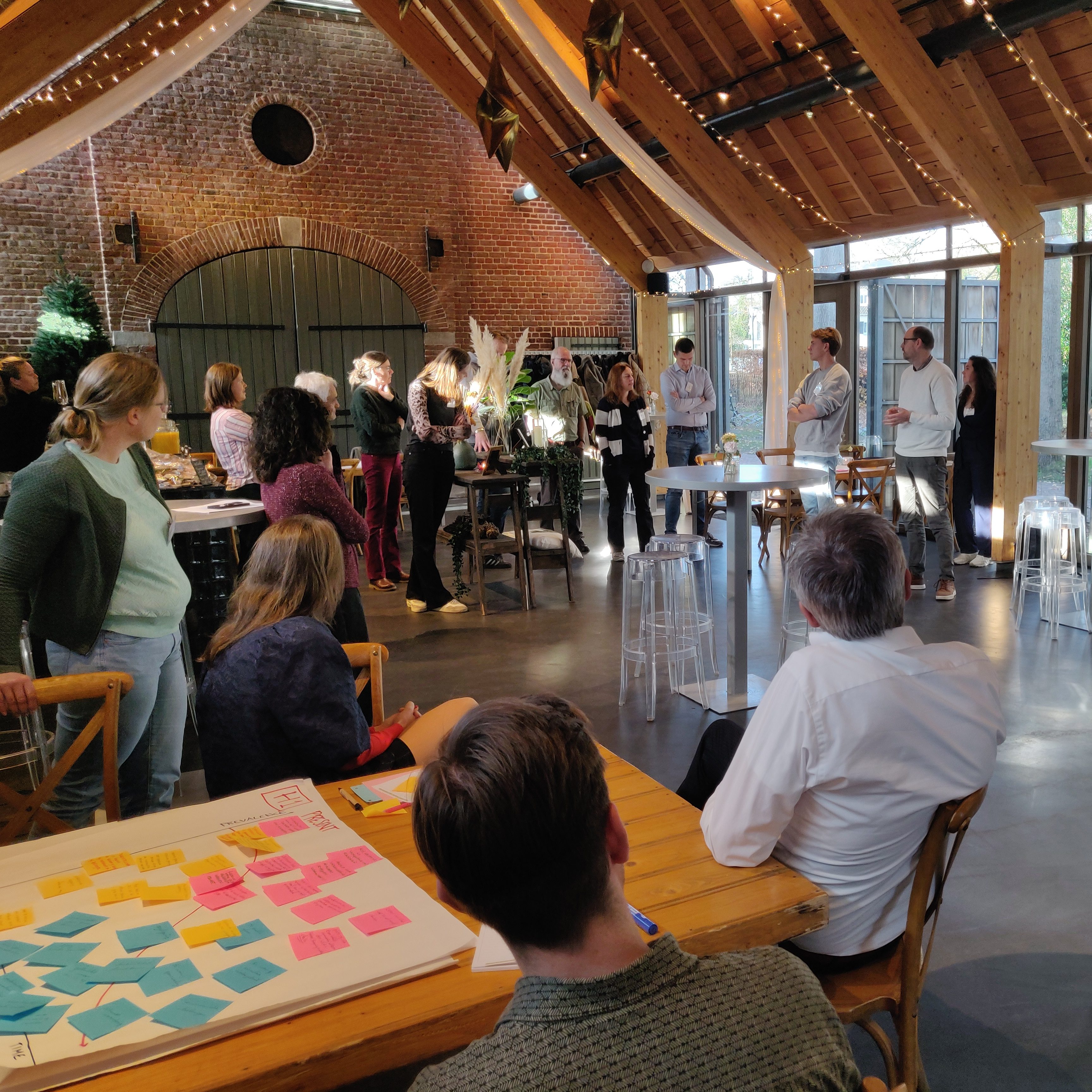
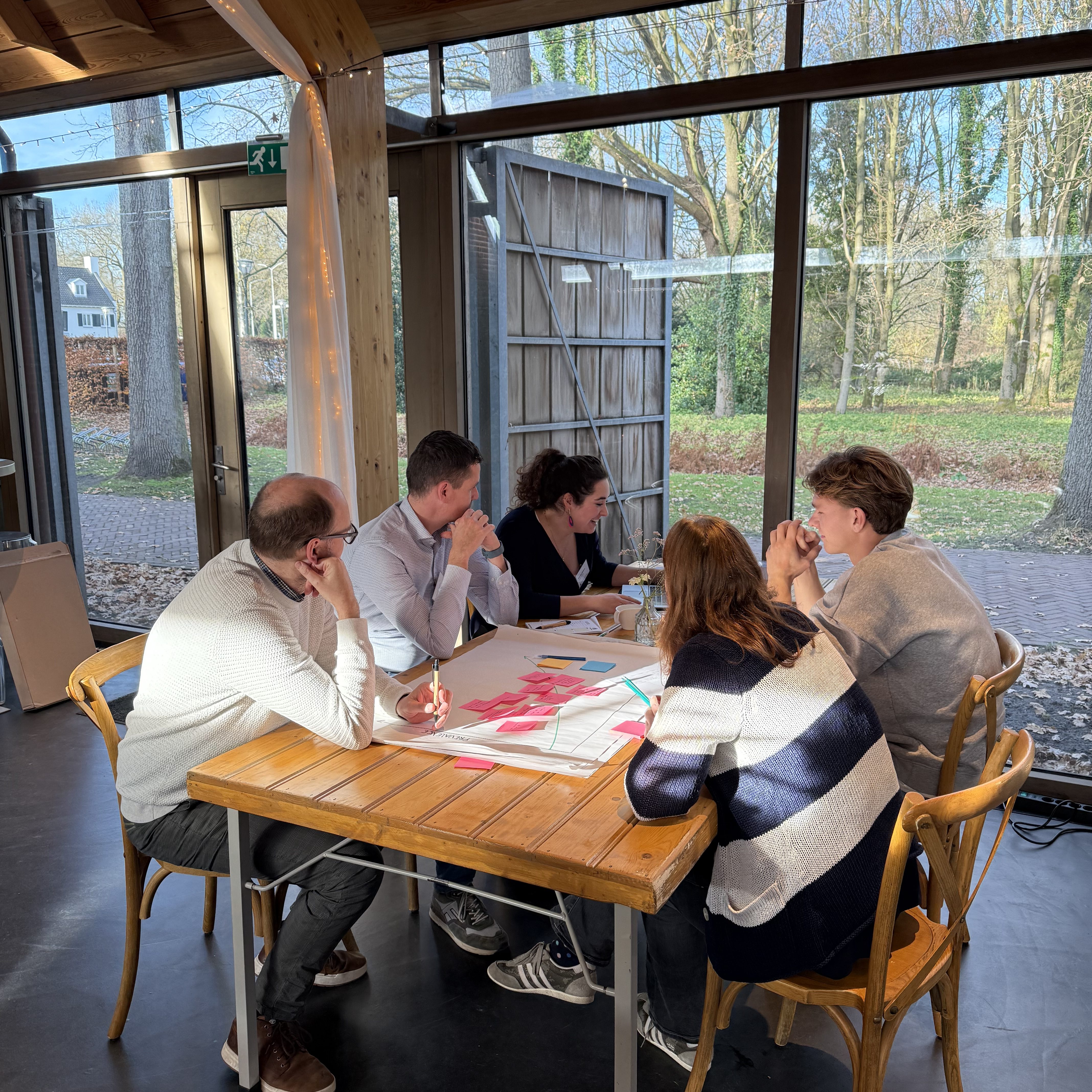
General stakeholder discussion about activity findings (Left), and group working on their horizons (right).
Short presentations from the organising projects helped set the scene and broaden the scope of the discussions. These inputs aimed at challenging conventional thinking. For example, Noor Hendriks from WaterScape encouraged participants to imagine disruptive futures that go beyond existing vision documents for Dutch waterscapes, which often converge on similar images and solutions.
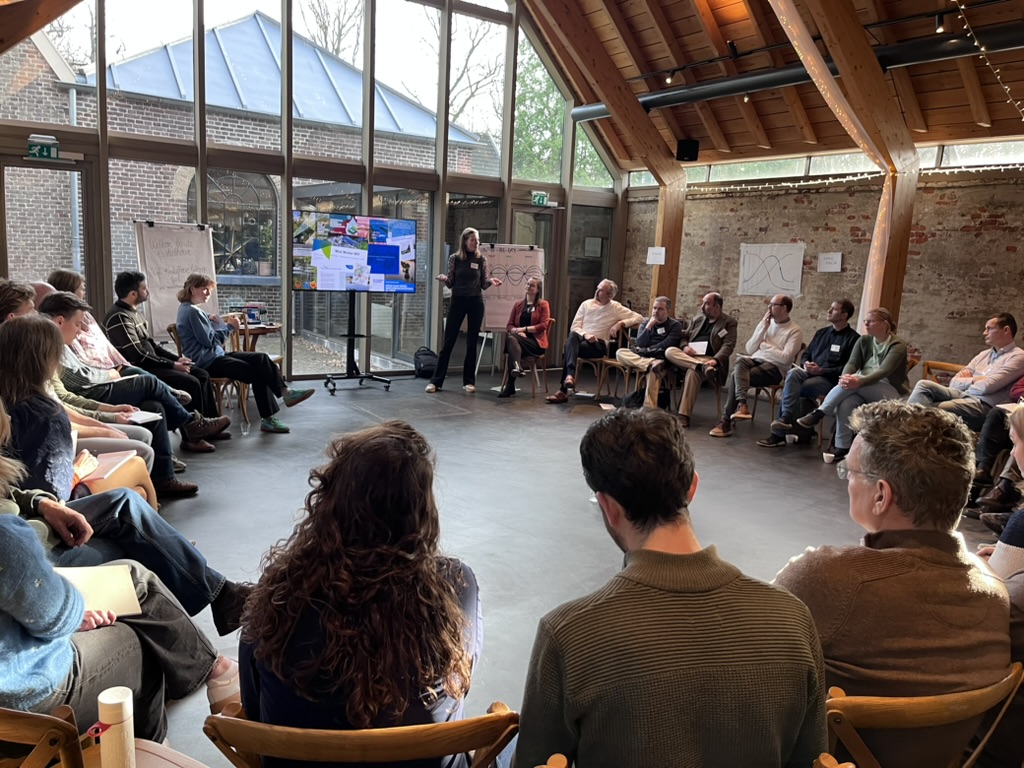
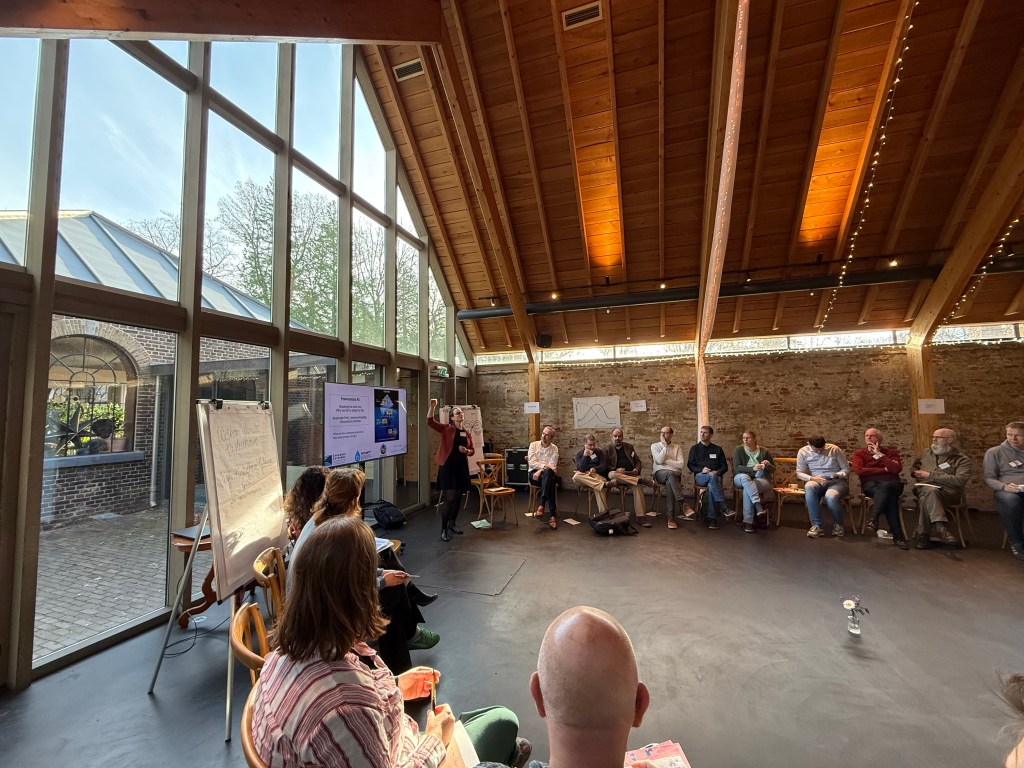
Noor Hendriks (left) and Johanna Koehler from GroundedExtremes (right) provoking the participants to think beyond existing visions and reflect on lock-ins.
The workshop was designed as a fun, interactive, and safe environment in which creativity played a central role. Through group games and creative exercises guided by Dona Geagea, participants were encouraged to step outside their usual professional perspectives. The outcomes were presented in unconventional ways, including poems, short performances, and the use of AI.
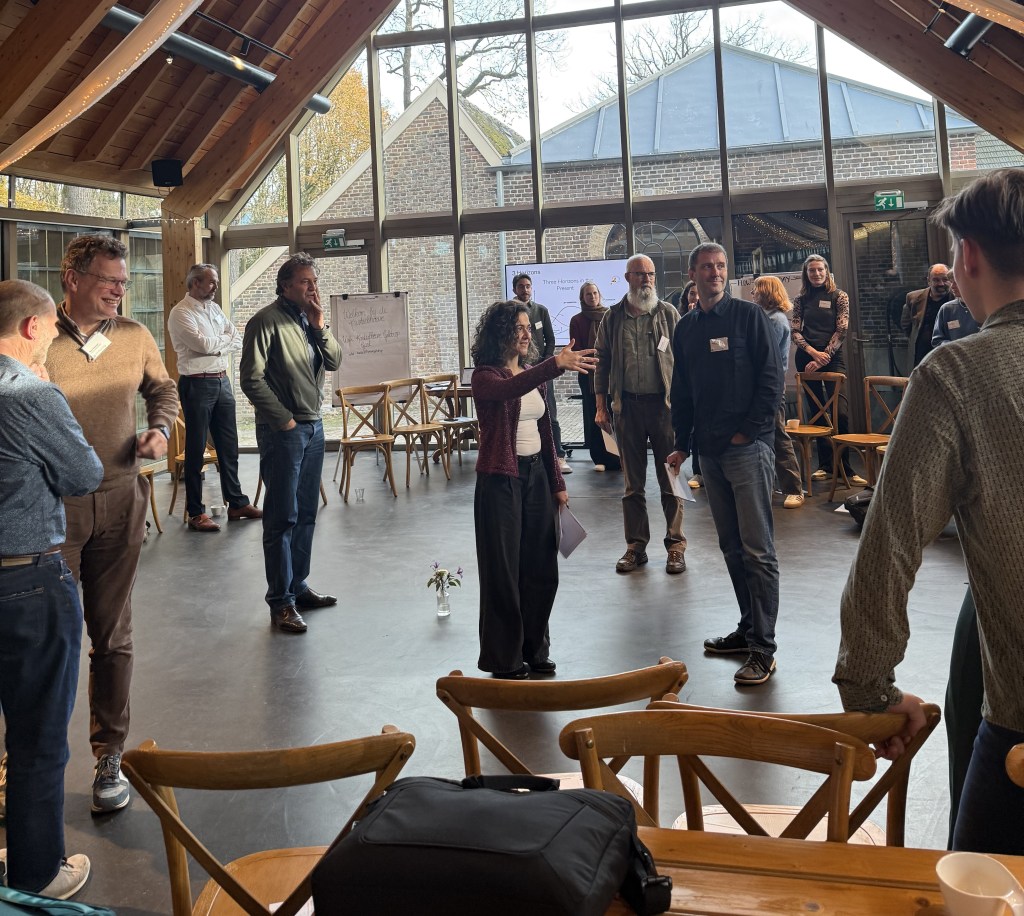
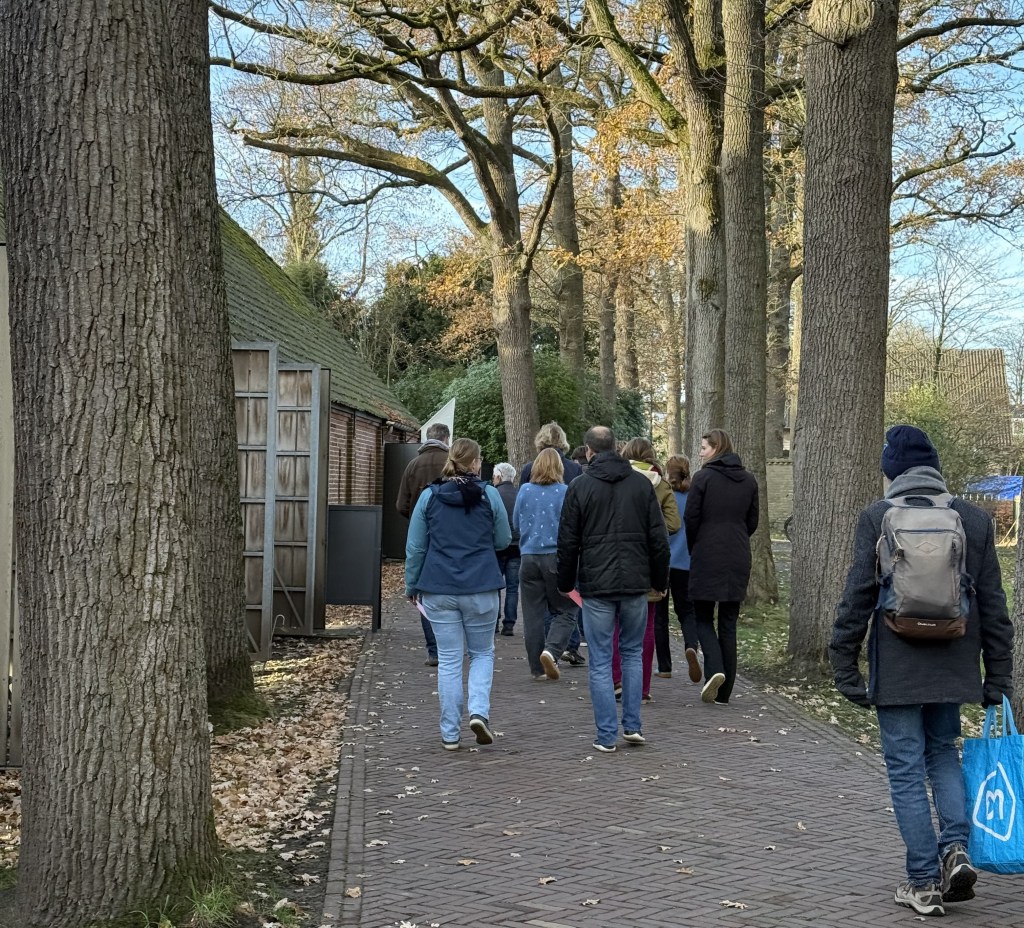
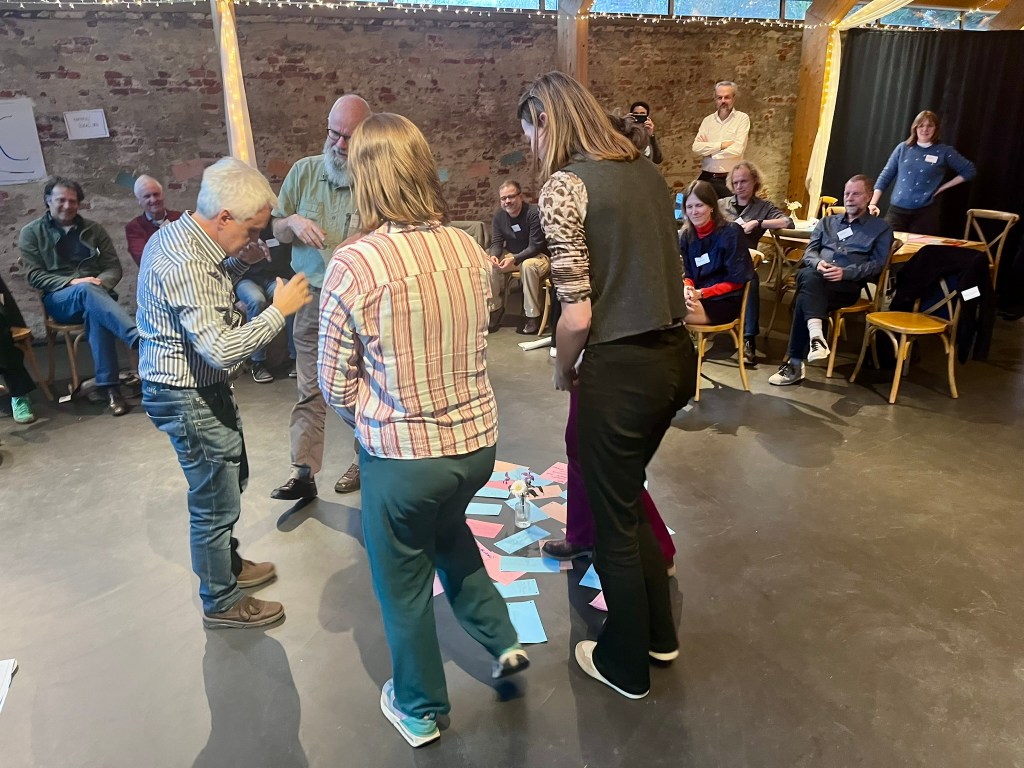
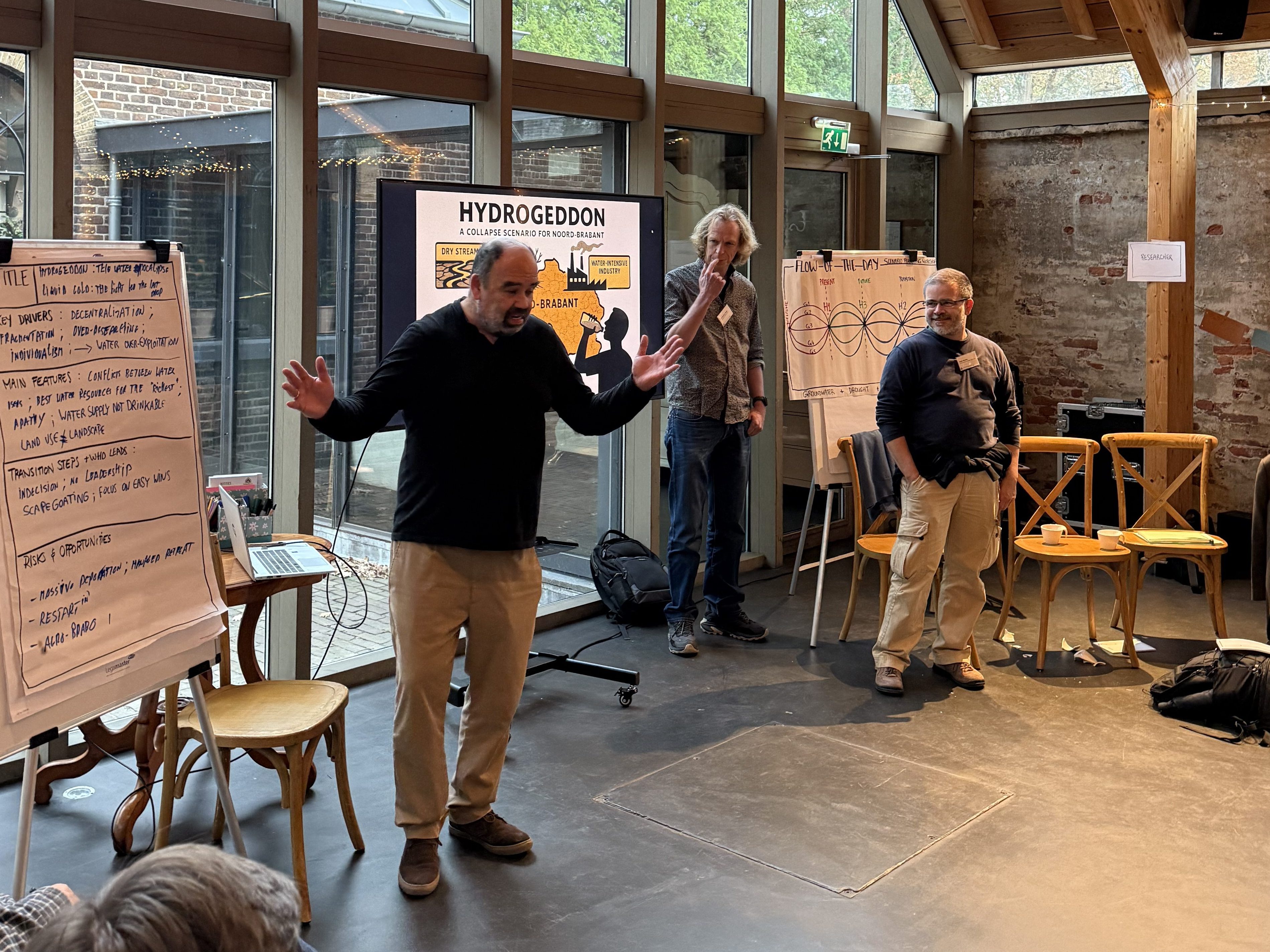
Interactive stakeholder mapping exercise (upper left); Walking activity to create future North Brababant’s newspaper titles (upper right); Group acting on their horizons (lower left); Group using AI to represent a collapse scenario of North Brabant (lower right).
 GroundedExtremes